Time & Frequency Application Line
Connecting Dutch strontium clocks to Europe's optical fiber network
A clock is only as useful as its connections
Optical clocks have become so good that the usual ways of comparing them, for example via satellite signals, can no longer keep up. To compare clocks in different cities, to distribute their signals to users, or to test fundamental physics with them, you need a better channel: light sent through optical fibers. Across Europe, national research and education networks and metrology institutes are therefore building a time and frequency network over fiber. The community meets in GÉANT's Special Interest Group on Time and Frequency Networks.
The Dutch hub
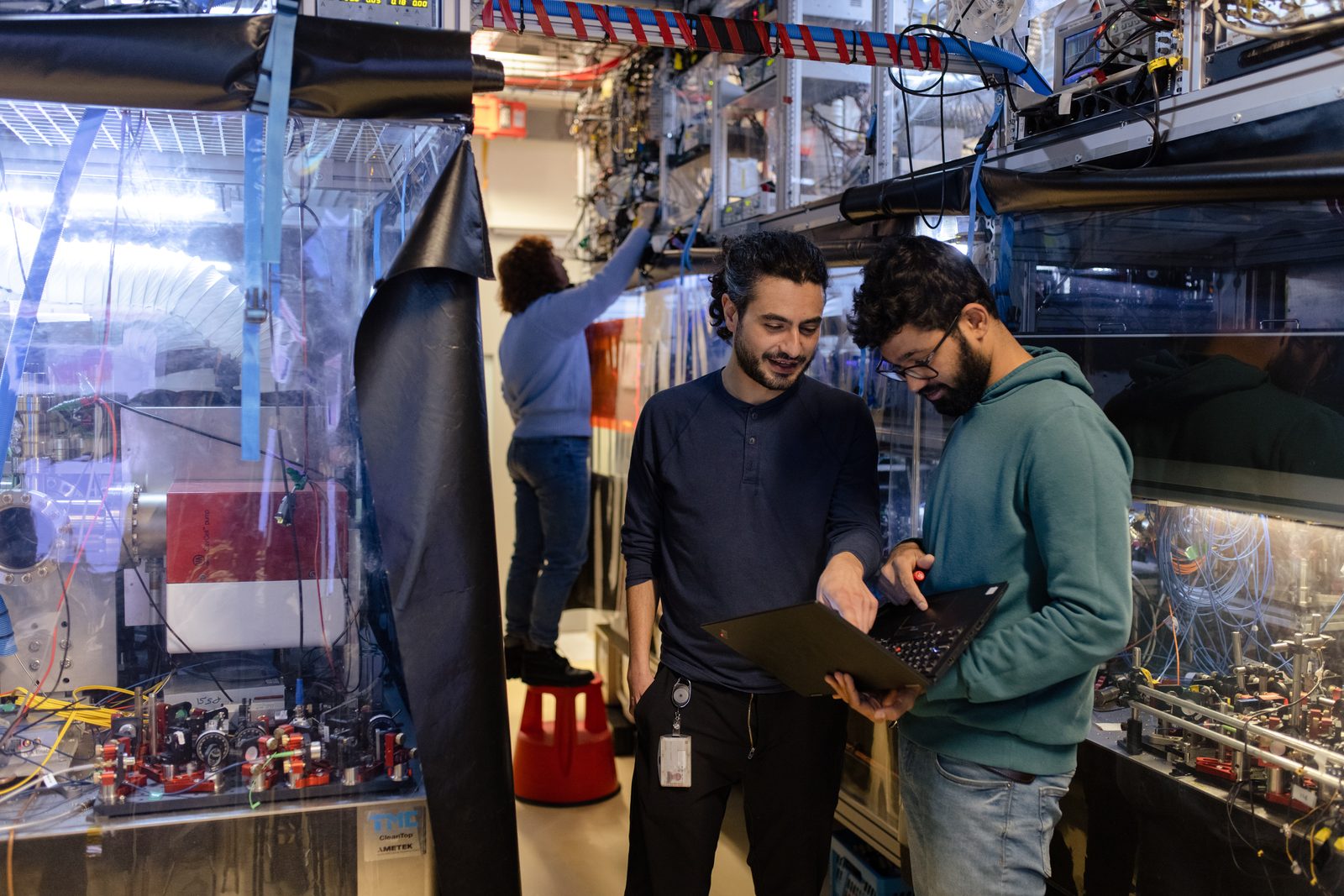
Within the Time & Frequency Application Line of QDNL, we are building the Dutch hub of this network together with VSL, the Dutch national metrology institute, SURF, which operates the Dutch research network, and VU Amsterdam (Jeroen Koelemeij). The hub in our lab has three main parts:
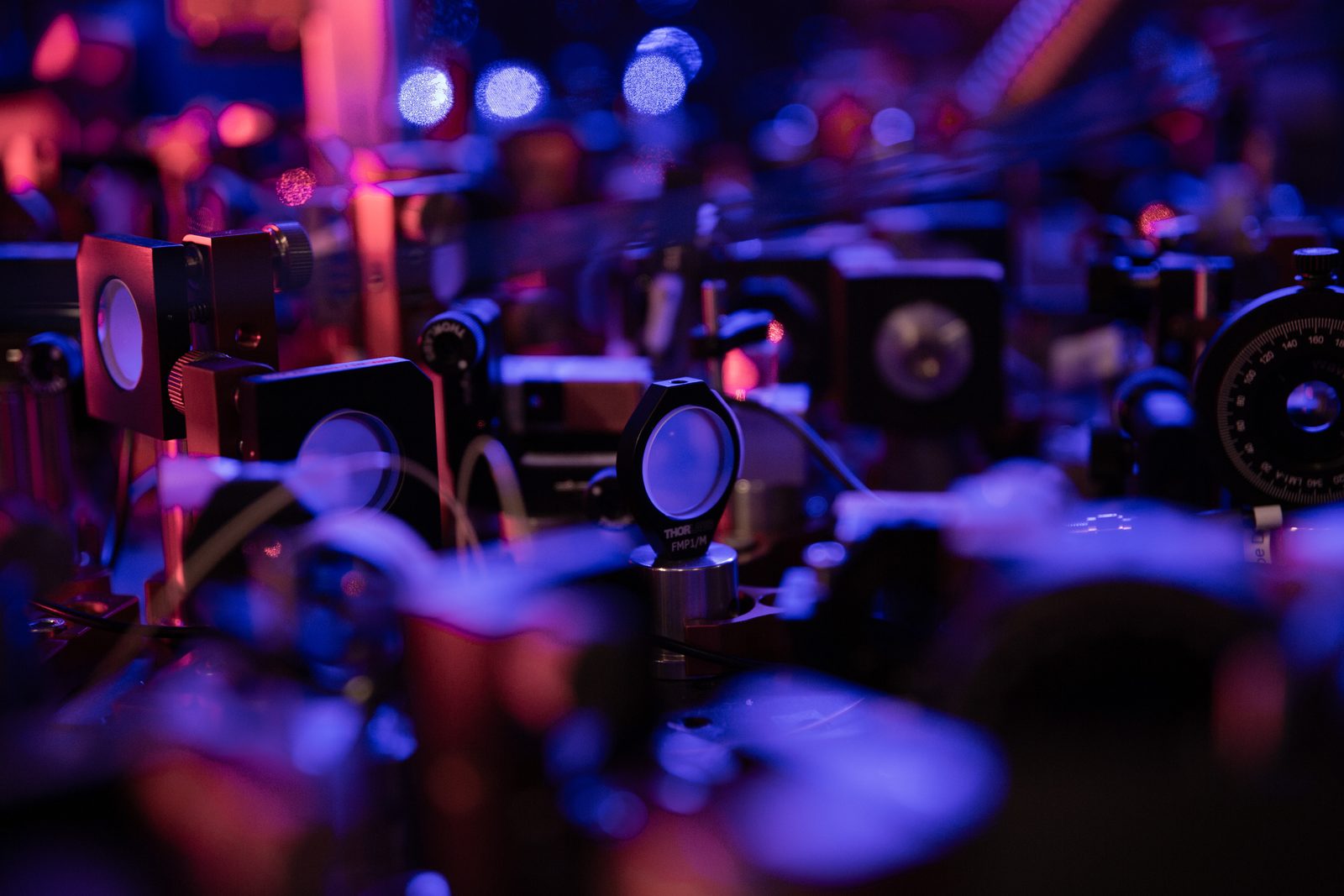
- A clock laser at 698 nm, the wavelength of the strontium clock transition, stabilized to an ultrastable cavity made of ultra-low-expansion (ULE) glass.
- An optical frequency comb that transfers the stability of the 698-nm strontium clock light to the telecom range, where optical fibers have low loss and where the network operates.
- Repeater stations that will connect our lab through long-distance fiber links to LTE at the Observatoire de Paris and to PTB in Braunschweig, two of Europe's leading time and frequency laboratories.
The hub also needs a strontium clock that can produce a reference signal locally. Here our other machines come in: the zero-dead-time clock, which shares the lab with the hub, is designed for this job, and our SrMic and SrPAL machines can provide a strontium reference as well.
Why it matters
A fiber network that carries the signals of optical clocks is useful for much more than comparing clocks. It can synchronize telecom networks and radio telescopes, support navigation, and provide a backup for systems that today depend on satellite navigation. For science, linking clocks across Europe enables tests of fundamental physics and better time scales. The interface between our clocks and the network already pays off in the lab: our quasi-continuous ultracold strontium source uses a frequency comb that can take its long-term stability from a 10 MHz signal provided by VSL.
Working on time and frequency
This project sits where atomic physics meets photonics and telecom engineering. You will work with clock lasers, frequency combs, fiber links, counters and control systems, and with partners from metrology institutes and network operators. If you have ever wanted to send the tick of an atomic clock to Paris through a glass fiber, this is your chance. The team includes postdoc Zhichao Guo, and András Gácsbaranyi and Sumit Sarkar from the zero-dead-time clock, working together with our partners at VU Amsterdam.
Gallery